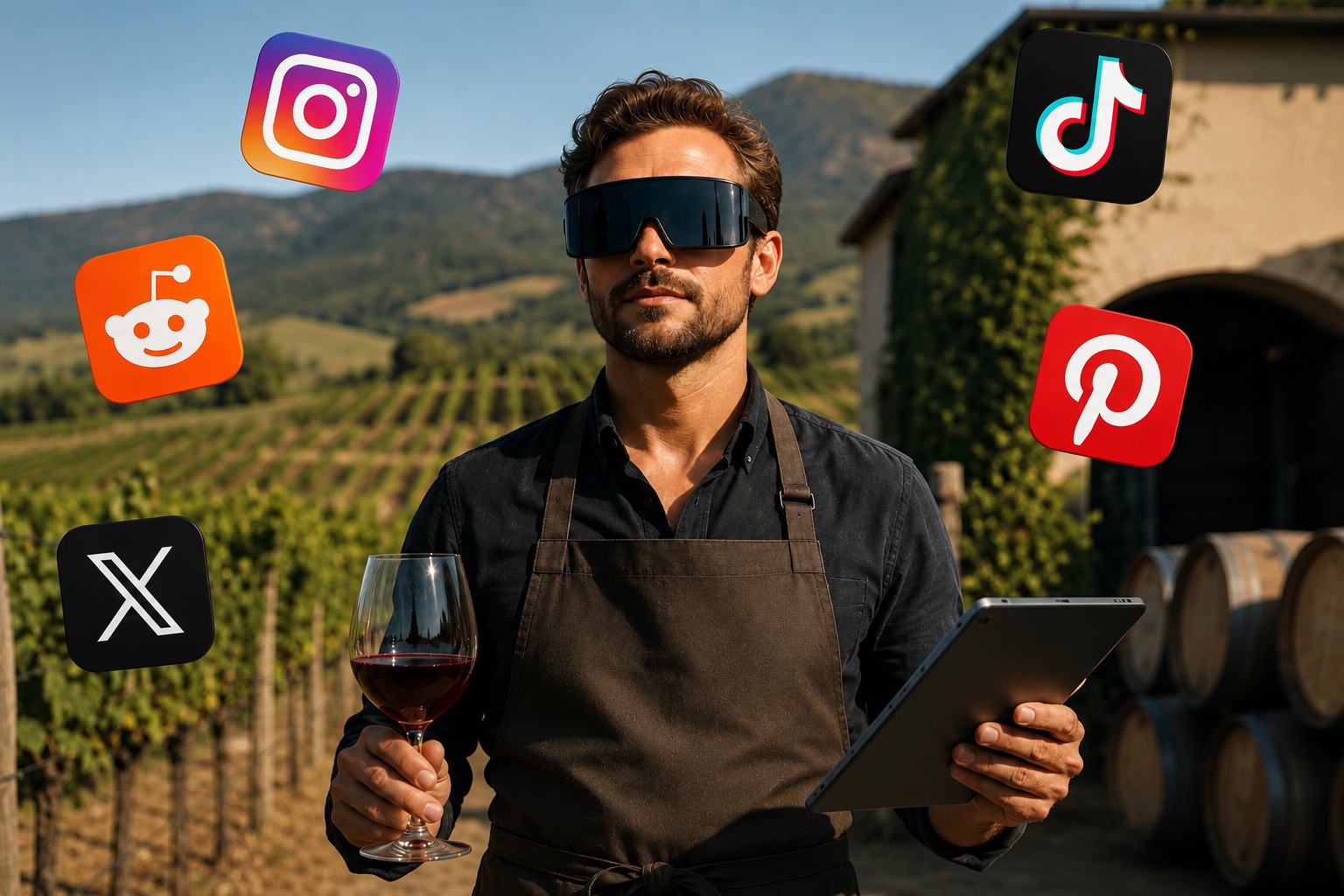
Wineries are falling behind modern marketing expectations, and the impact is showing up in flat foot traffic, sluggish DTC sales and shrinking brand relevance. While global digital ad spending and social media usage keep climbing, many cellar doors are still behaving as if it’s 1998, not 2026.
The reality of consumer behaviour
Whether you bought your vineyard in the 90s, inherited it from your parents or grew it from scratch, there was probably a time when “doing the basics” was enough to keep the books healthy. Today, that’s no longer true, because consumer behaviour tends to move in the same direction across all categories, regardless of whether you sell wine, fashion or software.
Digital advertising and alternative media grew by more than 13 percent in 2024 alone, signalling that brands across the board are shifting spend into channels where consumers actually are. If your approach to marketing hasn’t fundamentally changed in the last five to ten years, you are asking a modern audience to behave like a past generation, and they won’t.
Younger audiences and rising expectations
Agriculture is not an exception to the rule; younger drinkers expect more information, more access and more relevance from every brand they interact with. They have grown up in a world where “if it’s possible, why can’t we have it?” is the default mindset, not “that’s how it’s always been.”
Your current and future audience interacts with brands across phones, tablets, laptops, desktops, gaming devices, connected TVs and increasingly through AI-driven interfaces. Even if your present demographic is older and more traditional, fast forward ten years and today’s reluctance to adapt will have compounded into a serious commercial liability.
Fragmented channels, fragmented attention
On top of the hardware landscape, there is the ever-expanding mix of platforms: Meta, Reddit, TikTok, YouTube, Pinterest, Snapchat and whatever comes next. You are not immune to being discussed, or ignored, on these platforms just because you never created an account.
Even mid-30s millennials now use communities like Reddit to research brands and look for unfiltered, peer-to-peer reviews, in part because trust in traditional review environments (like generic star ratings on Google Map listings) is eroding. If people are talking about you and you’re not listening, or worse, not present, you are forfeiting control of your story.
Different platforms, different buying behaviours
What many winery owners miss (but every digital marketer sees daily) is that each platform shapes buying behaviour differently. Reddit users convert well because they see it as a more trustworthy, discussion-led environment than a curated Instagram feed. Pinterest is where people go when they’re actively building an aesthetic and seeking places and products that “fit the board,” which is a gift for highly visual cellar doors, vineyard stays and wine tourism experiences.
Instagram has moved decisively into pay-to-play territory; it is now, first and foremost, an advertising platform rather than a community town square. If you’re still treating Instagram like it’s 2015, posting the odd vineyard sunset and hoping “engagement” turns into bookings, you’re behind. If you want genuine connection and discovery, the energy has shifted to short-form video platforms like TikTok, especially among Gen Z and younger millennials.
The data advantage you’re ignoring
The reason you must participate in these ecosystems isn’t just exposure; it’s data. Platforms collect an enormous volume of behavioural and demographic information about their users and how they interact with brands. While the raw data is tightly controlled, the insights you can access, through ad managers, analytics dashboards and tracking—are available to you.
Those insights tell you who is actually engaging with your brand, how they found you, what content moves them and what blocks them from purchasing. Wineries that remain “offline” aren’t just missing out on short-term sales; they’re voluntarily flying blind while their competitors develop a detailed map of their ideal customer.
Websites that don’t convert
Randomly reviewing winery websites makes one thing painfully clear: there is a black hole where a conversion-oriented digital experience should be. The standard pattern looks like this: a generic “About us,” a few environmental or sustainability bullet points, a row of social links and a “Shop now” button.
For today’s consumer, that is boring and high-friction. Most traffic now lands on product, booking or landing pages from external channels; people shouldn’t have to dig through your website to figure out who you are and why you matter. When your story, visuals and user experience are weak, the bounce rate goes up and the cart stays empty, no matter how good the wine actually is.
Why you need modern marketing expertise
There is a pressing need for dedicated budgets to be allocated to marketers, strategists and specialist agencies who understand how to integrate all of these moving parts into a coherent communication ecosystem. That investment doesn’t just pay for “more posts”; it pays for a system that connects your cellar door, DTC channel, tourism product and trade relationships into a single narrative.
Because here’s the uncomfortable truth: wine quality and tasting notes are subjective; consumers will argue forever about which style or region is “better.” But a strong story, a contemporary visual identity, a coherent colour palette and staff at the cellar door who tell the same story as your website and social channels—that is not subjective. These are the fundamentals that separate brands that compete on discount from brands that command loyalty and price.
Picking the right platforms (not all of them)
Not every platform is right for every winery, and chasing every trend is a fast track to burnout and wasted budget. The point is not to be everywhere; it’s to be strategically present where your audience already spends attention and where you can show up consistently with quality.
That might mean using Instagram and Meta ads as your paid engine, TikTok or Reels for top-of-funnel discovery, Pinterest for tourism and events content, and Reddit listening for insight into how people actually describe your brand. The mix will differ for a heritage Barossa producer versus a coastal NSW natural wine start-up—but the need for a deliberate mix is universal.
External pressures you can’t control
Finally, it would be naive to pretend that macro forces aren’t at play. In Australia, wine and broader alcohol categories are navigating rapid socio-cultural shifts, from changing attitudes toward drinking to tighter regulation and public health campaigns. Government policy has made life harder for growers and producers, and that won’t magically reverse.
You cannot control those external headwinds, but you can control how adaptable your marketing, storytelling and customer experience are in response. The wineries that survive and grow in the next decade will not be the ones with the most trophies in the cabinet; they will be the ones that treat digital as an essential part of their agricultural business, not an optional extra.
If you read this and recognise your own brand in it, now is the time to act: audit your digital presence, reallocate part of your cellar-door budget into modern marketing, and partner with a specialist who can turn your story into a competitive advantage instead of a liability, because the wineries that move first will be the ones today’s drinkers still remember in ten years.