Recently, there was a moment that shouldn’t have happened.
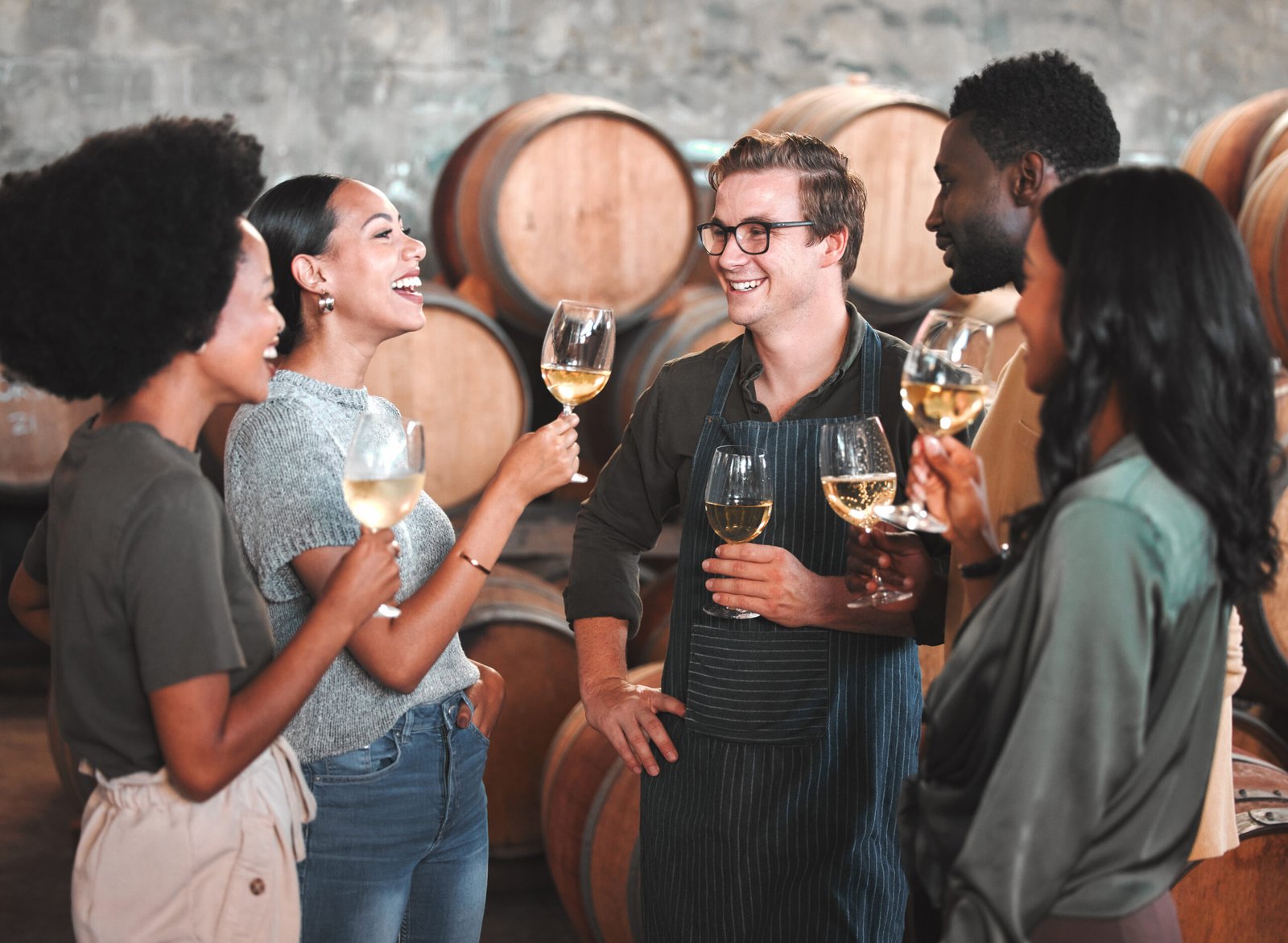
At 11am on a Friday at a cellar door in Mudgee, my parents, who are notoriously price-sensitive and rarely spend more than $30 on a bottle walked out with six. Not one. Six. ALL were over $30.
Nothing about the wines had fundamentally changed. The setting wasn’t unusually premium.
But the experience was.
There was someone guiding the tasting. Someone translating what we were experiencing in real time. Someone who understood not just the wine, but us. How we were responding, what we were hesitating on, what we needed to feel confident enough to buy.
What changed wasn’t the product.
It was confidence.
And confidence is what unlocked spend.
Wine has a Guidance Deficit.
Declining engagement with wine is frequently attributed to shifts in consumer preference.
Common explanations emphasise increased health consciousness, substitution toward RTD alternatives, or a broader disengagement from traditional categories. While these factors may contribute at the margins, they do not sufficiently explain observed purchasing behaviour.
A more robust explanation lies in the conditions under which wine is presented and selected.
The consistent assumption across both retail and on-premise environments is that increased choice, greater access to information, and higher levels of autonomy will improve decision outcomes.
However, in complex and subjective categories such as wine, the inverse dynamic often emerges.
As the number of options increases, cognitive load rises, perceived risk intensifies, and decision confidence declines.
The outcome is not improved decision-making, but decision friction manifesting as hesitation, reliance on familiar or lower-risk options, or complete disengagement from the category.
Why Tasting Notes Don’t Guide — They Limit
In response to this decision friction, the wine industry has traditionally relied on informational tools, most notably tasting notes, as a means of supporting consumer choice.
These tools attempt to reduce uncertainty by providing descriptors of flavour, structure, and style, with the assumption that additional information will improve decision quality.
However, this approach is limited in its effectiveness.
Tasting notes function as static, standardised representations of a product within a category that is inherently subjective and context-dependent. Rather than facilitating decision-making, they often introduce an additional layer of cognitive complexity by requiring consumers to interpret abstract descriptors and translate them into expected personal preference. In short, they don’t guide behaviour. They constrain it.
Because the moment you tell someone what they should taste, you introduce the idea that there is a correct answer.
And if they don’t find it?
They question themselves.
Confidence drops.
Engagement drops with it.
In this way, informational cues intended to guide an experience may instead reinforce the very friction they are designed to resolve.
Critically, these tools lack the capacity to adapt in real time to individual consumer responses, preferences, or uncertainty. They do not reduce ambiguity; they standardise it.
By contrast, human interaction introduces a dynamic and responsive form of guidance, capable of interpreting hesitation, adjusting communication, and contextualising the product in a way that aligns with the consumer’s perspective.
The Real Gap: People, Not Product
Across the industry, there is no shortage of technical expertise – the industry doesn’t lack knowledge. It lacks people who can translate that knowledge into effective decision support at the point of interaction.
We are seeing:
- Retail staff selling wine without being trained to guide decisions
- Cellar door hosts pouring without shaping the experience
- Restaurants handing over lists instead of leading conversations
In each case, the underlying pattern is consistent: the responsibility for resolving complexity is transferred to the consumer.
This has direct commercial consequences.
Wine is a discretionary purchase, and as such, each decision to engage with the category involves an implicit evaluation of value. In the absence of guidance, this evaluation is shaped by uncertainty; around personal preference, product suitability, and the risk of making an unsatisfactory choice.
Under these conditions, consumers adopt risk-minimising behaviours. They select lower-priced options, default to familiarity, reduce quantity, or disengage from the category altogether.
If wine is a complex product, the expectation is clear: the capability of the person selling it must exceed the complexity of the product itself.
In categories where products are complex, subjective, or high-risk, effective commercial environments typically compensate through skilled, adaptive human interaction. The role of the intermediary is not just to communicate product attributes, but to reduce ambiguity, interpret preference, and guide the consumer toward a confident decision.
Where this capability is present, the decision-making process becomes structured rather than uncertain. Perceived risk declines, the product is contextualised, and the purchase becomes easier to justify.
The result is not only increased likelihood of conversion, but an expansion in purchase value. Consumers become more willing to explore, to trade up, and to engage more fully with the category.
Where this capability is absent, complexity remains unresolved and its commercial impact is reflected directly in reduced conversion and lower-value purchasing behaviour.
Retail: Where Conversion Is Won (or Lost)
Walk into a Dan Murphy’s and you are not choosing between 6 wines, you’re choosing between 600.
Under these conditions, the environment does not function as a space for discovery, but as one requiring coping strategies.
These strategies are observable and consistent: consumers default to previously purchased products, rely on superficial cues such as label design, or select options perceived to minimise the risk of dissatisfaction.
This behavioural pattern helps explain the performance of low-price segments, such as the $5–$10 bins. Their success is not necessarily driven by product superiority, but by their ability to reduce perceived risk and simplify decision-making.
From a commercial perspective, that should be alarming.
Because what it tells you is:
When guidance is absent, price becomes the decision-maker.
Now flip that.
By contrast, in retail environments where staff actively engage in the decision-making process, measurable shifts occur:
- Conversion rates increase
- Dwell time increases
- Average basket size increases
Even small interventions; one question, one recommendation, can shift a customer from a $10 bottle to a $30+ purchase.
This represents a substantial uplift in value, driven not by changes in product, but by the introduction of human guidance.
And yet, most retail environments treat staff as operational, not commercial assets.
Cellar Doors: High-Leverage Conversion Environments
The cellar door represents one of the few environments in which wineries maintain full control over both the product and the conditions under which it is experienced.
And yet, most treat it as a tasting, not a conversion strategy.
- A host pours.
- Recites notes.
- Moves on.
But the moment you introduce active guidance:
- Conversion rates increase
- Bottle quantity per customer rises
- Willingness to trade up becomes more pronounced
The earlier example of my parents illustrates this effect clearly. A price-sensitive consumer, who would typically purchase a single bottle at most, increased both quantity and spend when provided with guided interaction.
That is not a marginal gain.
That is a complete shift in behaviour.
Because a great host doesn’t just explain the wine. They:
- Read the customer
- Reduce perceived risk
- Attach meaning to the product
And in doing so, they don’t just sell wine. They make the customer feel confident buying it.
Restaurants: Leaving Margin on the Table
Within hospitality settings, wine represents one of the highest-margin categories available, yet its commercial potential is frequently under-realised.
In many cases:
- A wine list is dropped.
- The staff disappears.
And the customer is left to navigate a complex decision alone.
Under these conditions, predictable behavioural patterns emerge. Consumers will minimise perceived risk by selecting familiar options, choosing lower-priced products, or avoiding exploration altogether. The result is systematically constrained spend and reduced category engagement.
This is not a product problem.
It’s a service design problem.
Because the fix is simple—and incredibly high ROI.
Front-of-house staff who can ask three questions can materially shift revenue:
- “What do you normally enjoy?”
- “Do you want to stay safe or try something new?”
- “What are you eating?”
These interactions function by reframing the decision from an unstructured task into a guided process, thereby reducing uncertainty and enabling more confident selection.
In comparable high-complexity categories, such forms of assisted decision-making are standard practice. Within wine service, however, they remain inconsistently applied.
As a result, a high-margin category continues to operate below its potential, not due to lack of demand, but due to the absence of structured guidance upon ordering.
Experiential Retail: A scalable model for value creation
The primary opportunity for growth does not lie in expanding distribution, but in improving the conditions under which decisions are made.
Not in more distributors.
Not in more SKUs.
But in experiential retail.
Experiential retail extends beyond event-based activation. It refers to any environment in which product understanding is developed through interaction rather than passive exposure. In such environments, the role of guidance is embedded within the experience itself, enabling consumers to engage with the product in a way that reduces uncertainty and supports decision-making.
Other industries have already built entire models around this:
Luxury → personal shoppers driving high-ticket conversion
Beauty → consultations increasing basket size and loyalty
Technology → demos removing friction before purchase
Across these categories, a consistent pattern is observable: Guidance → Confidence → Higher Spend
Despite sharing similar characteristics of complexity and subjectivity, wine has been comparatively slow to adopt this model at scale.
But when it does, via:
- Guided tastings
- Hosted events
- Brand-led experiences
- Cellar door storytelling
The commercial impact is clear:
- Higher conversion rates
- Higher average order value
- Stronger brand recal
- Increased repeat purchase
These outcomes are not driven solely by increased exposure, but by the formation of memory.
Interactive environments do not simply present the product; they contextualise it within an experience. This strengthens cognitive and emotional associations, making future decision-making easier and reducing reliance on price or familiarity as primary heuristics.
In most industries, complexity is matched with support.
Final Thought
Wine does not require simplification as a category; it requires improved conditions for decision-making.
And that doesn’t come from more information.
It comes from better people.
When consumers are left to navigate complexity independently, predictable behaviours emerge. Decisions are simplified through risk minimisation; lower-priced selections, reduced exploration, and decreased overall spend.
But when they are guided, something changes.
Confidence replaces hesitation.
Experience replaces uncertainty.
And price becomes easier to justify.
The commercial implication is clear: improvements in experience design do not simply enhance customer satisfaction; they directly influence revenue outcomes.
Producers that recognise this will not only improve how wine is experienced, but will materially increase how it is purchased.
Because the most underutilised asset in wine isn’t what’s in the bottle.
It’s who’s standing next to it.