There is this ongoing narrative (one of many) that people are drinking less wine because they’ve “changed.”
They’re more health conscious.
They prefer RTDs.
They don’t appreciate tradition.
But that framing is lazy.
Because if you actually look at the environment people are making decisions in today, the problem becomes obvious: we haven’t reduced access to wine, we’ve flooded it. Humans are not designed to operate in environments with infinite choice. Psychologist Barry Schwartz made this argument years ago in The Paradox of Choice. His core idea is simple: more options don’t increase satisfaction, they increase anxiety, hesitation, and ultimately, avoidance. It’s been proven repeatedly.
Confirming this idea, Sheena Lyengar, in her study, showed that when consumers were presented with 24 jam options, they were far less likely to buy than when they were shown just 6. More choice didn’t lead to more buying. It led to decision paralysis.
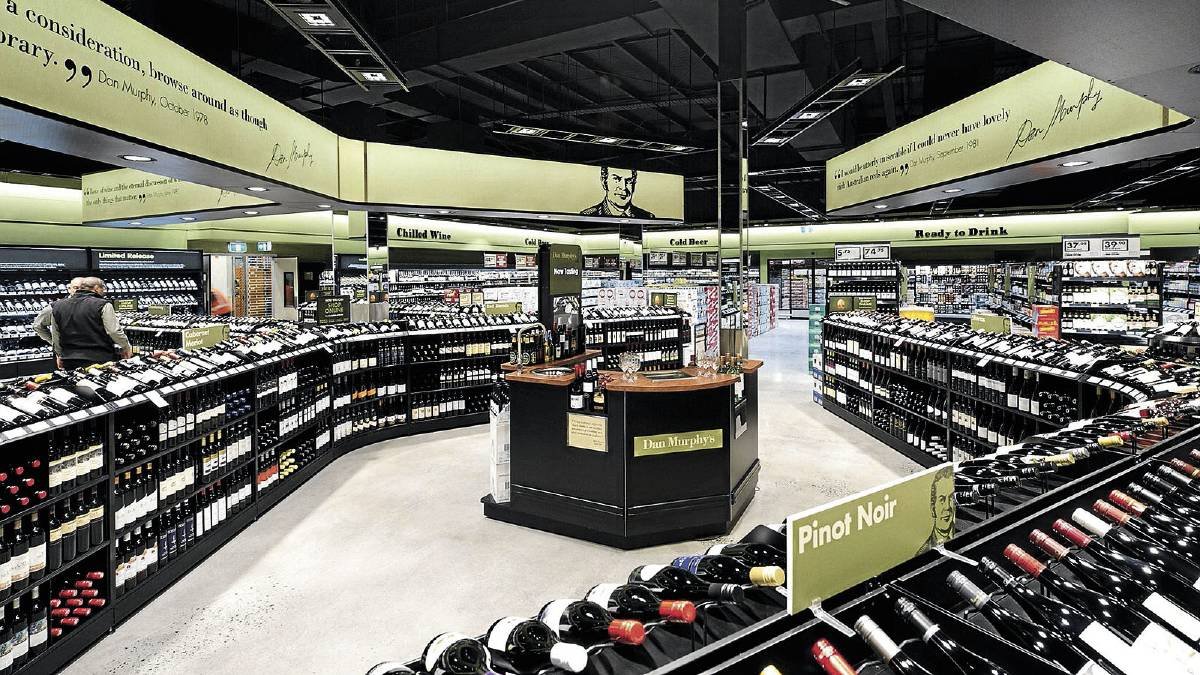
Now take that exact framework and walk into a Dan Murphy’s.
You’re not choosing between 6 wines.
You’re choosing between 600.
Wine Is Not a Low-Risk Decision
Here’s where wine becomes even more vulnerable than jam. Choosing wine is not just a choice. It’s a risk calculation. As I’ve written previously , wine asks a lot from a consumer. It’s not immediately rewarding, it’s not biologically aligned with what we’re wired to enjoy, and there is a very real chance you won’t like what you pick.
So when you combine:
- High cognitive load (too many options)
- Low confidence (lack of knowledge)
- High perceived risk (you might hate it)
You don’t get exploration. You get default behaviour.
People either:
- Buy what they already know
- Choose based on packaging
- Or avoid wine entirely
As I write this in March of 2026, this is exactly what we’re seeing.
Big Box Retail Is Optimised for Variety, Not Decision-Making
Large-format retailers like Dan Murphy’s in Australia or Total Wine & More in the United States are built on one idea: more range equals more appeal. But that logic only works in categories where consumers understand what they’re buying. Wine is not one of those categories, because unlike beer or spirits:
- The differences are subtle
- The language is inaccessible
- And the payoff is uncertain
So instead of helping consumers choose, these environments force them to cope.
And coping looks like:
- “I’ll just get the one I had last time”
- “This label looks nice”
- “I don’t want to get it wrong, I’ll grab something else”
This is not a discovery environment. It’s a defensive environment, and I witness it firsthand every week.
The $500 Illusion of “Exposure”
I’ve seen this firsthand in Australia. Producers are now paying ~$500.00 AUD just to be featured in in-store retail promotions (tastings) but these are mixed in with beers, RTDs, and spirits. No context. No guidance. No narrative. Just… presence.
But presence without understanding is useless because brand recall doesn’t come from seeing something once on a cart. It comes from having an experience tied to it.
If a consumer:
- Doesn’t understand your wine (story-telling)
- Doesn’t know when to drink it (context)
- Doesn’t know how it tastes (education)
Then seeing your label means nothing.
You’re not building a brand.
You’re burning budget.
This Is Why Packaging Has Become a Shortcut
When consumers can’t process information, they simplify. This is basic cognitive psychology – when overwhelmed, consumers rely on heuristics.
So in wine, that becomes:
- Label design
- Bottle shape
- Price cues
- Country recognition
Not because people are shallow, but because the mental processing is too complex. And this is why two wines of equal quality can perform completely differently on shelf.
One is understood.
The other is ignored.
Controlled Environments Always Win
So let’s talk about a curated wine list at a restaurant. Suddenly … people can choose.
Not because they’ve become more knowledgeable, but because the environment has changed.
This is what behavioural science calls choice architecture, a term popularised by Richard Thaler and Cass Sunstein. It refers to how decisions are shaped by the way options are structure, not just the options themselves.
When you reduce:
- The number of options
- The complexity of comparison
- The effort required to decide
You don’t just make decisions easier, you make them possible. This links directly to the work of Sheena Iyengar, where increasing choice actually reduced purchasing behaviour. Too many options don’t create freedom. They create hesitation.
Restaurants remove that hesitation.
They pre-curate. They filter. They narrow the field to something cognitively manageable. Instead of processing 300 wines, the consumer processes 8 (within a desired category). That reduction in cognitive load, our limited capacity to process information, dramatically increases the likelihood of action.
Now add a sommelier or even a basic recommendation into the mix, something as simple as: “If you liked that last one, you’ll like this” and what that does is reduce perceived risk.
From a behavioural perspective, this taps into:
- Authority bias (trusting expertise)
- Social proof (feeling reassured by guidance)
And when risk drops, willingness to try something new increases. But the real advantage of these environments isn’t just that people choose, it’s that they remember. Because in a restaurant, the wine isn’t just a product, it’s part of an experience. It’s tied to context, emotion, and moment. And that’s what forms memory.
And memory, not visibility, is what drives repeat choice.
That is where brands are built.
Not in aisle 12.
Brands That Built Demand Before Distribution
The brands that win aren’t the ones that start with scale. They’re the ones that start with clarity and repetition.
Look at how many successful modern brands:
- Focus on a tight range
- Show up consistently in the same venues
- Build identity before expanding distribution
They reduce cognitive load. They don’t ask consumers to figure them out. They make themselves easy to choose.
Think of 19 Crimes (AUS), Yellow Tail (AUS) and Barefoot Wine (USA).
On the surface, these brands look like “big wine success stories.” But what’s actually interesting is how they behaved at the start.
Not necessarily low capital, but very clear and limited SKU’s. That’s the difference.
The Future of Wine Distribution Is Not More
The industry keeps trying to solve this problem with more:
- More SKUs
- More shelf space
- More promotions
But the solution is the opposite. Less, but better structured.
Right now, wine distribution is built around high-volume, low-context environments where consumers are left to figure it out themselves. That model works for categories that are easy to understand. Wine is not one of them.
Wine requires:
- Context
- Confidence
- Reassurance
So when you place it in an environment with hundreds of options and no guidance, you’re not increasing opportunity, you’re increasing friction. If producers actually want to grow, they need to stop thinking about distribution as access, and start thinking about it as influence over decision-making. Because the brand that wins is not the one that is most available.
It’s the one that feels easiest to choose.
Build Experience First, Not Exposure
This is why the future of wine distribution is not bigger retail. It’s smaller, controlled, human-led environments.
Places where:
- Someone can explain the wine
- Someone can guide the choice
- Someone can attach a story to it
Because people don’t buy wine based on information, they buy it based on how confident they feel making the decision and that confidence is built through experience, not exposure. This is where most producers get it wrong with direct-to-consumer. They focus on selling online.
But the real opportunity is:
- Cellar doors with knowledgeable staff
- Tastings that guide, not overwhelm
- Events and partnerships that build understanding
Because once someone has had that experience, something changes. When they see your wine on a shelf later, they don’t have to think. They already know.
Which is also why most third-party brand activations are a waste of money.
They create exposure—but not understanding.
They create visibility—but not memory.
And without memory, there is no repeat purchase.
If you want to build or expand a wine brand today:
- Stop outsourcing your story
- Stop relying on passive environments
- Start investing in experiences you can control
Because in a category defined by overwhelm, the brands that win are not the ones that shout the loudest.
They’re the ones that make the decision feel effortless.